Maurício Amaro
Founder & WriterNeurodivergent dad, writer, and chronic tab-hoarder. ADHD & highly gifted. Writes about brains the way he lives — honestly, without the clinical distance.
Autistic Masking: What It Is and Why It's So Exhausting
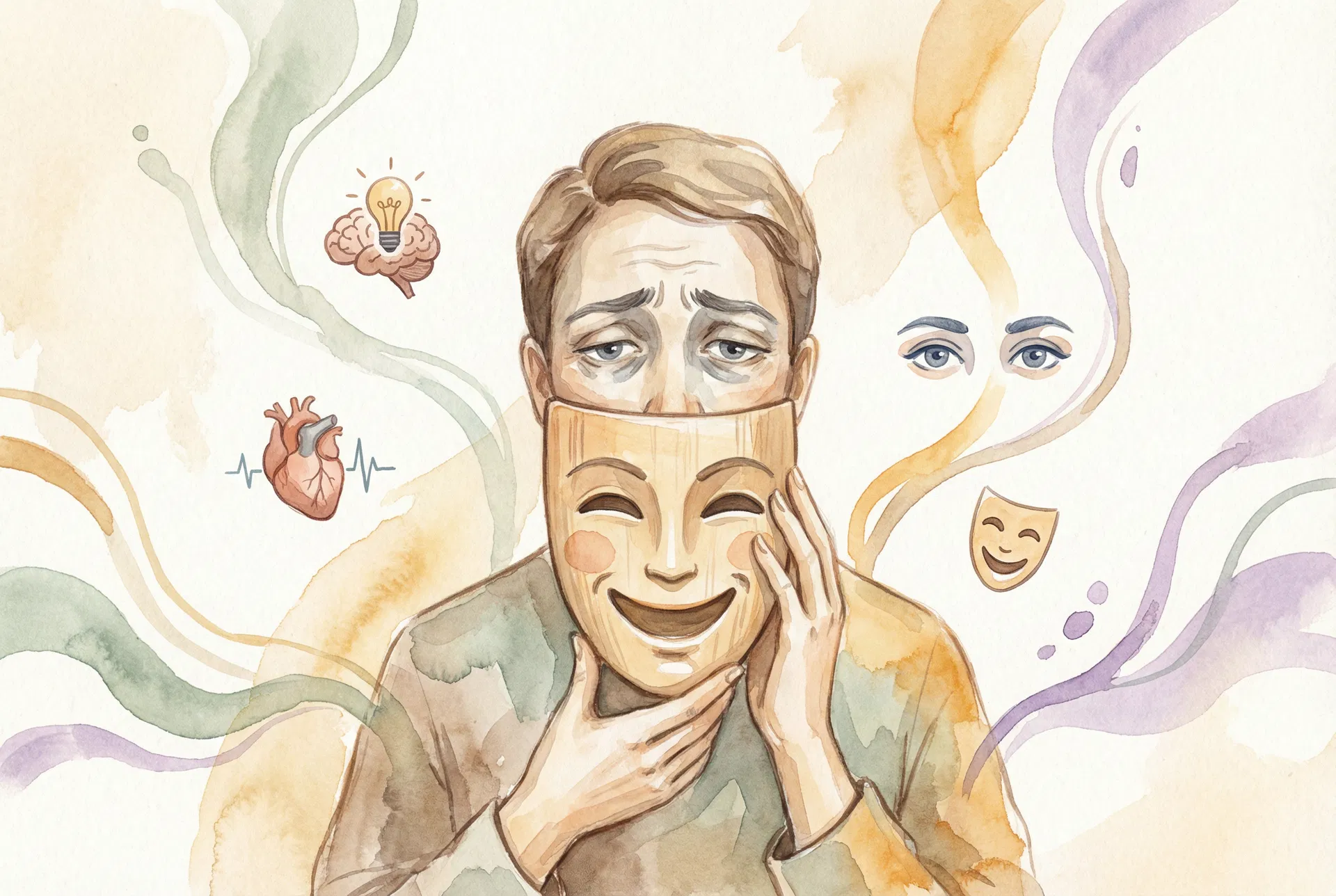
Masking is the conscious or unconscious suppression of autistic traits to appear neurotypical. It is not a choice — it is a survival strategy learned in response to a world that punishes difference.
Masking has a measurable cost: chronic fatigue, identity confusion, delayed diagnosis, and a significantly elevated risk of anxiety, depression, and autistic burnout.
Unmasking is not about performing autism — it is about reclaiming the right to exist as you actually are. It is a gradual, personal process that begins with safe spaces and self-compassion.
The Performance Nobody Asked For
Imagine spending every social interaction running a background programme in your head. Not just listening to what someone is saying, but simultaneously monitoring your own facial expression, calculating the appropriate moment to nod, suppressing the urge to talk about the thing you actually care about, maintaining eye contact at the level that reads as engaged but not intense, modulating your voice so it does not sound too flat or too enthusiastic, and rehearsing your next sentence so it comes out in the right order.
Now imagine doing that every day. At school. At work. With family. With strangers. For years. For decades. Without ever being told that other people are not doing this.
This is masking. And for millions of autistic people, it is not a strategy they chose. It is a survival skill they developed before they even had a word for what they were doing.
What Is Autistic Masking?
Masking — also called camouflaging — refers to the set of strategies autistic people use to suppress, hide, or compensate for autistic traits in order to appear neurotypical. The term was first formally studied in the context of autism by researchers Francesca Happe and Uta Frith, and has since been explored extensively by Dr Sarah Cassidy, Dr Laura Hull, and others whose work has transformed how the field understands autism presentation.
Masking can be conscious or unconscious. In its conscious form, it involves deliberate choices: making eye contact even when it is uncomfortable, scripting conversations in advance, practising facial expressions in the mirror, suppressing stimming in public. In its unconscious form, it has become so deeply ingrained that the person no longer notices they are doing it — they have simply internalised the performance.
Common masking behaviours include:
Social mimicry — copying the body language, speech patterns, and mannerisms of people around you to blend in.
Scripting — memorising and rehearsing phrases, responses, and conversational sequences so interactions feel more manageable.
Suppressing stimming — hiding or replacing natural self-regulatory movements (rocking, hand-flapping, finger-tapping) with more socially acceptable ones.
Forced eye contact — maintaining eye contact despite it being uncomfortable, distracting, or even painful.
Performing emotions — displaying expected emotional responses (smiling, laughing, expressing enthusiasm) regardless of what you actually feel.
Masking interests — downplaying or hiding deep interests to avoid being seen as odd or obsessive.
Masking is not the same as simply being polite or adapting to social contexts — something everyone does to some degree. The difference is in the scale, the cost, and the absence of a baseline. Neurotypical people adjust their behaviour in different contexts. Autistic people who mask are not adjusting — they are constructing an entirely different version of themselves, and maintaining that construction is exhausting.
Why Do Autistic People Mask?
Masking does not emerge from nowhere. It is a learned response to a very clear set of social signals: that the way you naturally are is wrong, strange, too much, or not enough.
For many autistic people, masking begins in childhood — often before diagnosis, sometimes before they are even aware they are autistic. The child who gets laughed at for talking too much about trains learns to talk about other things. The teenager who gets excluded for not understanding social hierarchies learns to observe and mimic. The adult who loses jobs because they are perceived as blunt or difficult learns to soften every sentence.
The motivations for masking are not trivial. Research consistently shows that autistic people face higher rates of bullying, social rejection, unemployment, and mental health difficulties. Masking is, in many cases, a rational response to a world that is genuinely hostile to autistic difference. It is a way of staying safe, keeping a job, maintaining relationships, and avoiding the particular pain of being visibly different in a world that does not accommodate difference well.
For autistic women and girls, and for people of colour, masking is often more intense and more thorough — and this is one of the primary reasons these groups are diagnosed later, if at all. When the mask is convincing enough, the autism becomes invisible. And when the autism is invisible, the diagnosis does not come. And when the diagnosis does not come, the person spends decades not understanding why everything feels so much harder for them than it seems to for everyone else.
The Cost of Masking
Masking is not free. It has a price, and that price is paid in energy, identity, and mental health.
Energy depletion. Masking is cognitively and physically exhausting. The constant monitoring, suppressing, and performing draws on executive function resources that are already stretched in many autistic people. This is one of the reasons autistic people often experience profound fatigue after social interactions — not because they are antisocial, but because the interactions required enormous, invisible effort. This phenomenon is sometimes called the autistic tax: the extra cognitive load of navigating a world not designed for your brain.
Post-masking collapse. Many autistic people describe a period of intense exhaustion, emotional dysregulation, or shutdown after sustained masking — particularly after long days at work, social events, or any situation that required prolonged performance. This is the nervous system releasing what it had to hold together. It is not weakness. It is the bill coming due.
Identity erosion. When you spend enough time performing a version of yourself, you can lose track of who you actually are. Many autistic people — particularly those who were not diagnosed until adulthood — describe a profound sense of not knowing their own preferences, needs, or personality. They have spent so long adapting to what others want that they have no clear sense of what they want. This is not a personality flaw. It is the direct consequence of a lifetime of masking.
Mental health consequences. The research here is stark. A 2017 study by Cassidy et al. found that camouflaging was significantly associated with suicidal ideation in autistic adults. Hull et al. (2017) found that masking was linked to anxiety, depression, and reduced quality of life. The relationship is not incidental — it is causal. Masking forces people to deny their own needs, suppress their own responses, and perform a self that is not theirs. Over time, this is deeply harmful.
Delayed and missed diagnosis. Because masking makes autism less visible, it directly contributes to late diagnosis — particularly in women, girls, and people of colour. The average age of diagnosis for autistic women is significantly higher than for autistic men. Many people are not diagnosed until their 30s, 40s, or later — often after a crisis, a burnout, or a child's diagnosis that prompts them to recognise themselves in the diagnostic criteria. The years before diagnosis are years without support, without understanding, and without the language to make sense of their own experience.
Neurodivergent Burnout Calculator
Masking is one of the primary drivers of autistic burnout. If you have been masking for years, it is worth checking in on your current burnout level.
Masking and Autistic Burnout
Autistic burnout is not the same as general burnout, though the two share surface similarities. It is a state of profound physical and mental exhaustion, loss of skills, and increased sensitivity to sensory and social input that results from sustained masking and the chronic stress of navigating a neurotypical world.
Burnout can last weeks, months, or years. During burnout, skills that the person had previously managed — communication, self-care, work, social interaction — can regress significantly. An autistic adult who had been functioning well in a demanding job may find themselves unable to hold a conversation. Someone who had been managing independently may need significant support.
The relationship between masking and burnout is direct. The more intensely and consistently someone has masked, the higher their burnout risk. This is why many autistic people experience their first major burnout in their late 20s or 30s — after a decade or more of sustained masking in educational and professional environments that required constant performance.
Recovery from autistic burnout requires, above all, a reduction in masking demands. This means reducing social obligations, creating low-demand environments, and — crucially — beginning to unmask.
Autistic Meltdown vs Shutdown: What's the Difference?
Both are involuntary responses to overwhelm — but they look completely different from the outside. Learn what distinguishes a meltdown from a shutdown and how to support yourself through both.
Read articleWho Masks the Most?
Masking is not equally distributed across the autistic population. Several factors influence how intensely someone masks and how long they go without recognition.
Gender. Research consistently shows that autistic women and girls mask more thoroughly than autistic men and boys. This is partly socialisation — girls are more intensely trained in social performance from an early age — and partly the fact that autistic traits in women often present differently from the male-dominated diagnostic criteria that have historically defined autism. The result is that autistic women are diagnosed later, misdiagnosed more frequently (often with anxiety, depression, or borderline personality disorder), and experience higher rates of burnout.
Race and ethnicity. Autistic people of colour face additional masking pressures. In communities where standing out carries greater social risk, or where mental health and neurodevelopmental differences carry stigma, the pressure to mask can be even more intense. Research on autism in Black, Asian, and minority ethnic communities is still limited, but what exists suggests significant disparities in diagnosis rates and support access.
Late diagnosis. People who were not diagnosed until adulthood have typically spent more years masking without support or understanding. By the time they receive a diagnosis, masking may be so deeply ingrained that it is difficult to distinguish from their baseline personality.
High intelligence. Autistic people with high cognitive ability are often able to construct more convincing masks — using their analytical skills to decode social rules and replicate them. This is sometimes called the "twice exceptional" paradox: the very skills that allow someone to function in demanding environments are also the skills that make their autism invisible, delaying support and increasing burnout risk.
Unmasking: What It Is and What It Is Not
Unmasking does not mean performing autism. It does not mean deliberately stimming in public, refusing all social conventions, or announcing your diagnosis to everyone you meet. Unmasking is not a political act, though for some people it becomes one.
Unmasking is, at its core, the gradual process of allowing yourself to exist as you actually are — rather than as the version of yourself you constructed for other people's comfort.
It looks different for everyone. For some people, it means allowing themselves to stim when they need to, without shame. For others, it means being honest about sensory needs — asking for quieter environments, wearing sunglasses indoors, using headphones without apologising. For others still, it means letting go of scripted social performances and allowing conversations to be more authentic, even if they are less smooth.
Unmasking is not a switch you flip. It is a long, non-linear process that involves:
Finding safe spaces. Unmasking is easiest where the risk of negative consequences is lowest. This might be with a trusted partner, a close friend, a therapist, or an online community of other autistic people. Safe spaces allow you to practise being yourself without the stakes of professional or social rejection.
Identifying your mask. Many people who have masked for a long time do not know what their mask looks like, because it has become automatic. Therapy — particularly with a therapist who understands autism — can help identify the specific behaviours that are performed rather than authentic.
Grieving. For many people, the process of unmasking involves grief — for the years spent performing, for the diagnosis that came too late, for the version of themselves they might have been with earlier support. This grief is real and valid.
Rebuilding identity. After years of masking, many autistic people need to actively discover their own preferences, interests, and ways of being. This is not a quick process. It requires curiosity, patience, and a willingness to sit with uncertainty.
Calm Down Exercises
If unmasking brings up anxiety or emotional overwhelm, our grounding and calm-down tools can help you regulate your nervous system in the moment.
Practical Steps Toward Unmasking
Start with one safe relationship
You do not need to unmask everywhere at once. Choose one relationship — a partner, a close friend, a therapist — where you feel safe enough to be more honest about your needs and experiences. Practise being yourself there first.
Identify your stimming needs
Notice what your body wants to do when you are stressed, excited, or overwhelmed. Rocking, tapping, humming, fidgeting — these are regulatory behaviours, not problems. Start allowing them in private, then gradually in safer public spaces.
Audit your social scripts
Make a list of things you say or do in social situations that feel performed rather than genuine. You do not need to stop all of them immediately — but naming them is the first step to choosing which ones you actually want to keep.
Communicate sensory needs directly
Instead of white-knuckling through uncomfortable environments, practise naming what you need. "I find loud spaces difficult — could we sit somewhere quieter?" is a complete, reasonable sentence. You do not need to justify it.
Connect with the autistic community
Reading and listening to other autistic people's experiences — particularly those who have been through the unmasking process — is one of the most powerful things you can do. It normalises your experience and provides a map others have already walked.
Work with an autism-informed therapist
Not all therapists understand masking. Look for someone who has specific experience with autistic adults, and who understands that the goal is not to help you mask better — it is to help you need to mask less.
A Note on Safety
Unmasking is not always safe. This is not a caveat — it is a reality that deserves to be named directly.
In some workplaces, unmasking can lead to discrimination. In some families, it can lead to conflict. In some social contexts, being visibly autistic carries genuine risk. The decision to unmask is personal, and it is not a failure to continue masking in environments where the cost of not doing so is too high.
The goal is not to unmask everywhere. The goal is to have enough unmasked space in your life that the mask does not become the whole of you. One relationship where you do not have to perform. One space where you can stim without shame. One hour a day where the performance is off.
That is enough to start.
Related Articles
 AuDHD
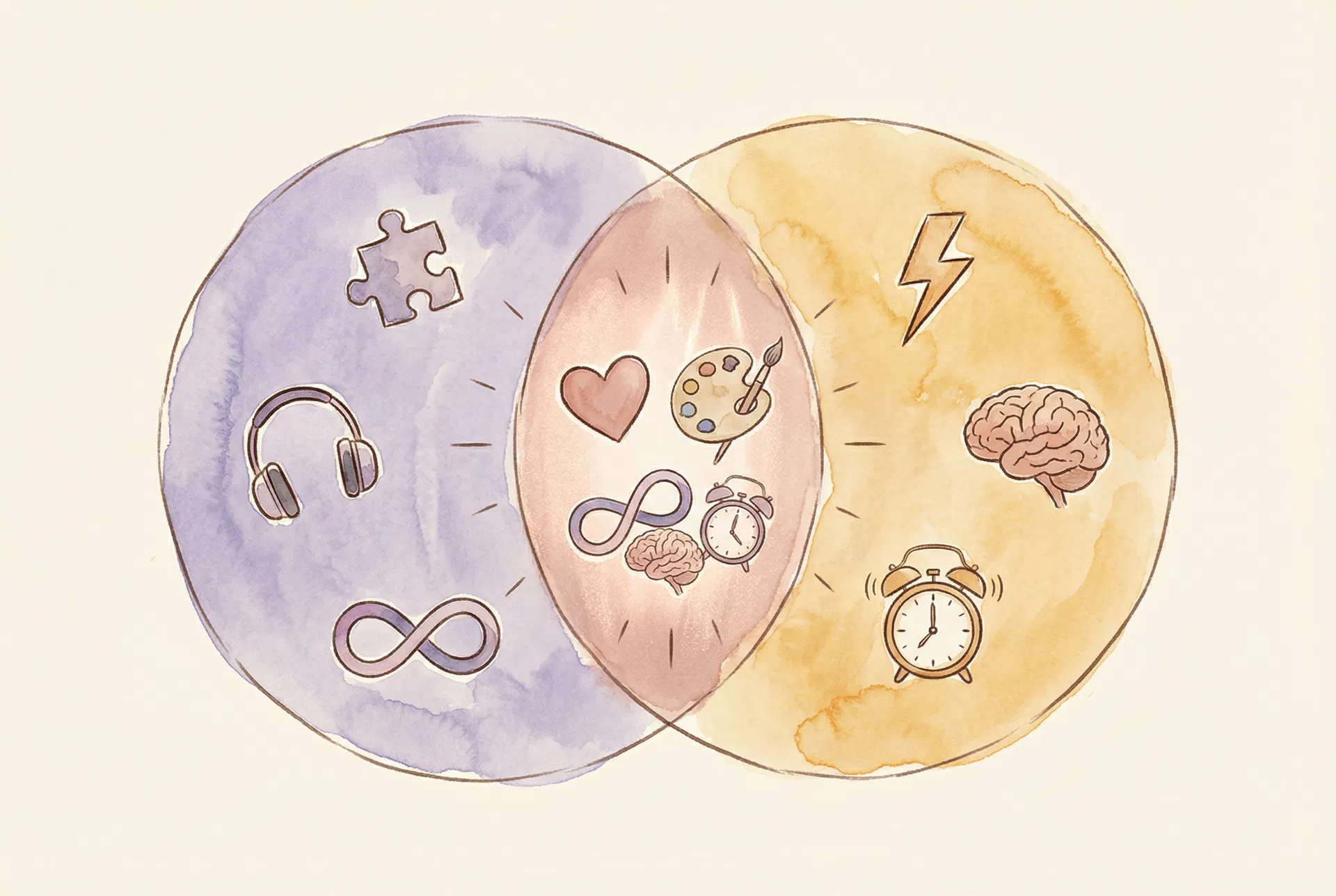
AuDHDWhat Is AuDHD? Understanding the Overlap Between Autism and ADHD
AuDHD is not autism plus ADHD — it is its own distinct experience. Millions of people are diagnosed with both, yet the overlap is still widely misunderstood. This guide explains what AuDHD is, how it presents, and why it is so often missed.
Read article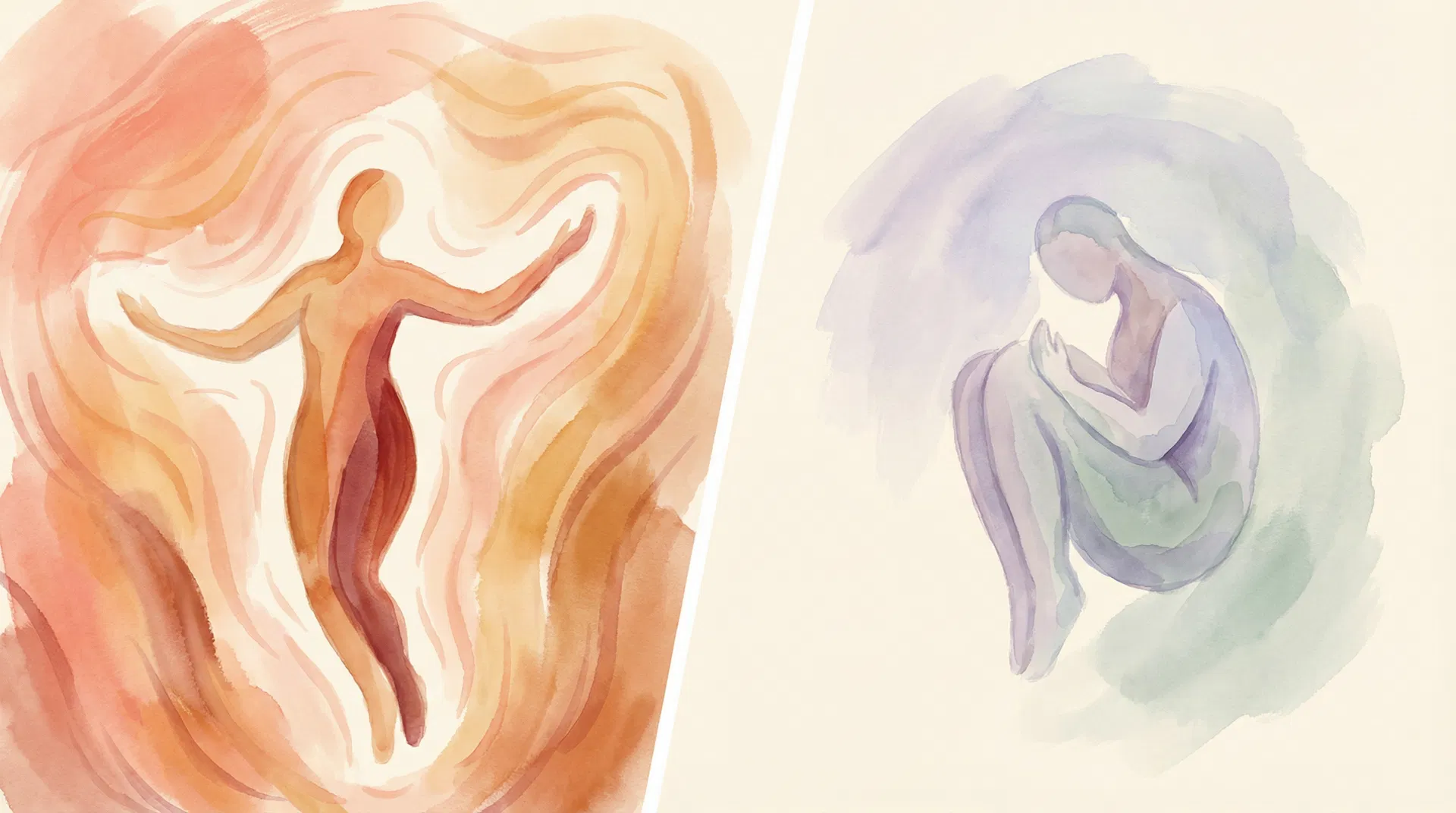 Autism
Autistic Meltdown vs Shutdown: What's the Difference?
Both are involuntary responses to overwhelm — but they look completely different from the outside. Learn what distinguishes a meltdown from a shutdown, what causes each, and how to support an autistic person (or yourself) through both.
Read article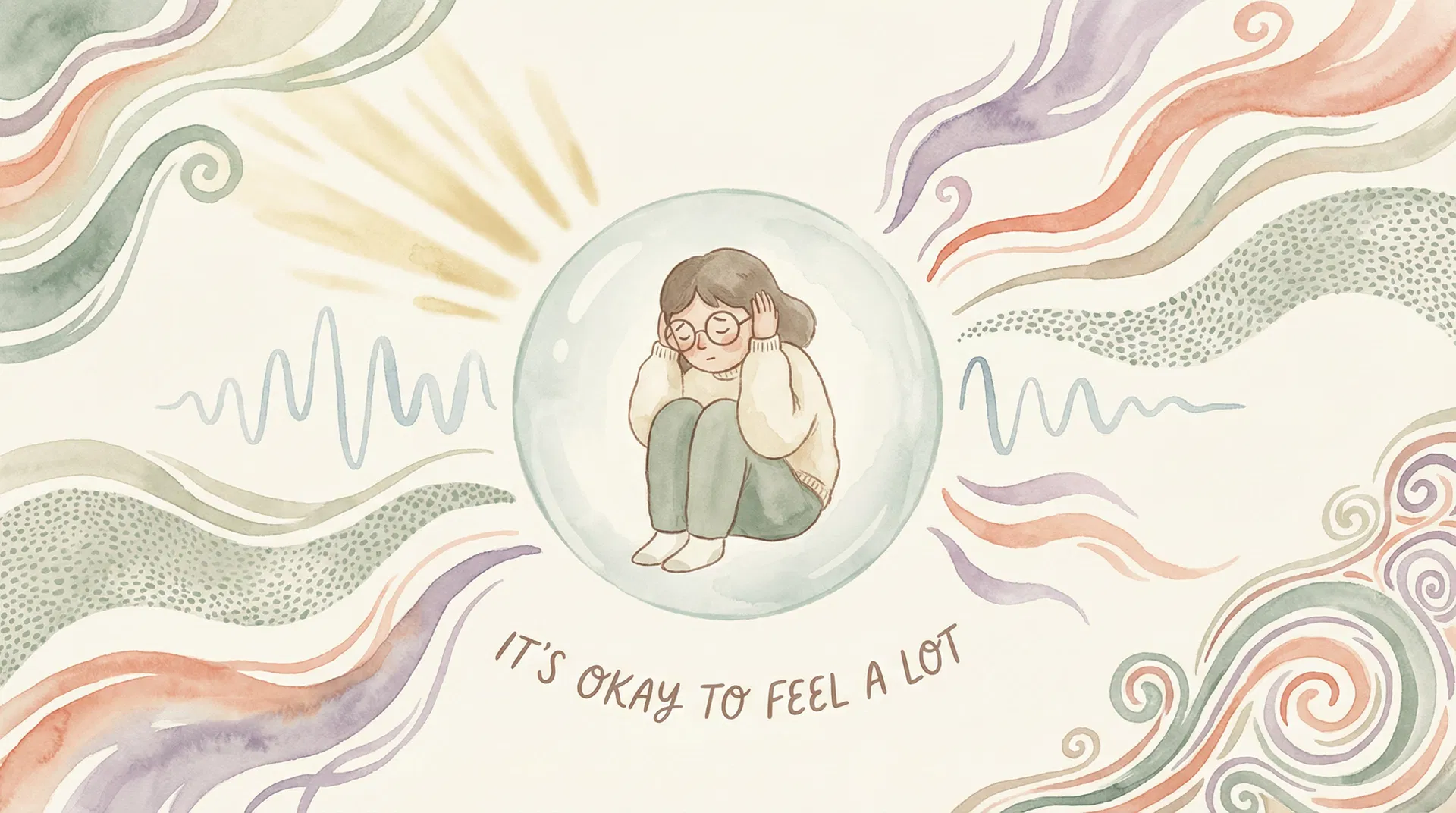 Sensory
Sensory Overload Survival Guide: What It Feels Like and How to Cope
When the world gets too loud, too bright, and too much — this guide explains what sensory overload is, why it happens in neurodivergent brains, and gives you practical coping strategies for home, work, and social situations.
Read article- 1Study2017
Putting on My Best Normal: Social Camouflaging in Adults with Autism Spectrum Conditions
Hull, L. et al. — Journal of Autism and Developmental Disorders
- 2Study2018
Autistic Adults' Experiences of Camouflaging and Its Relationship to Mental Health
Cassidy, S. et al. — Autism in Adulthood
- 3Study2017
Quantifying and Exploring Camouflaging in Men and Women with Autism
Lai, M.C. et al. — Autism
- 4Review2021
Pearson, A. & Rose, K. — Autism in Adulthood
- 5
- 6Book2022
Unmasking Autism: Discovering the New Faces of Neurodiversity
Price, D. — Harmony Books
All external links open in a new tab. The NDBourhood does not endorse any specific treatment or service.
About the Author
Maurício is a neurodivergent dad, writer, and the person who stays up too late reading research papers about dopamine and then forgets to save the tab. He has ADHD and is highly gifted — which mostly means his brain is running seventeen tabs at once, one of which is always a video game soundtrack. He writes about neurodivergence the way he lives it: honestly, without the clinical distance, and with a deep belief that understanding your own brain is one of the most radical acts of self-care there is.
More about usYou do not have to perform yourself into exhaustion
Our free tools are designed to support your nervous system — not demand more from it. Track your energy, check in with yourself, and find strategies that work for your brain.