What Sensory Overload Actually Feels Like
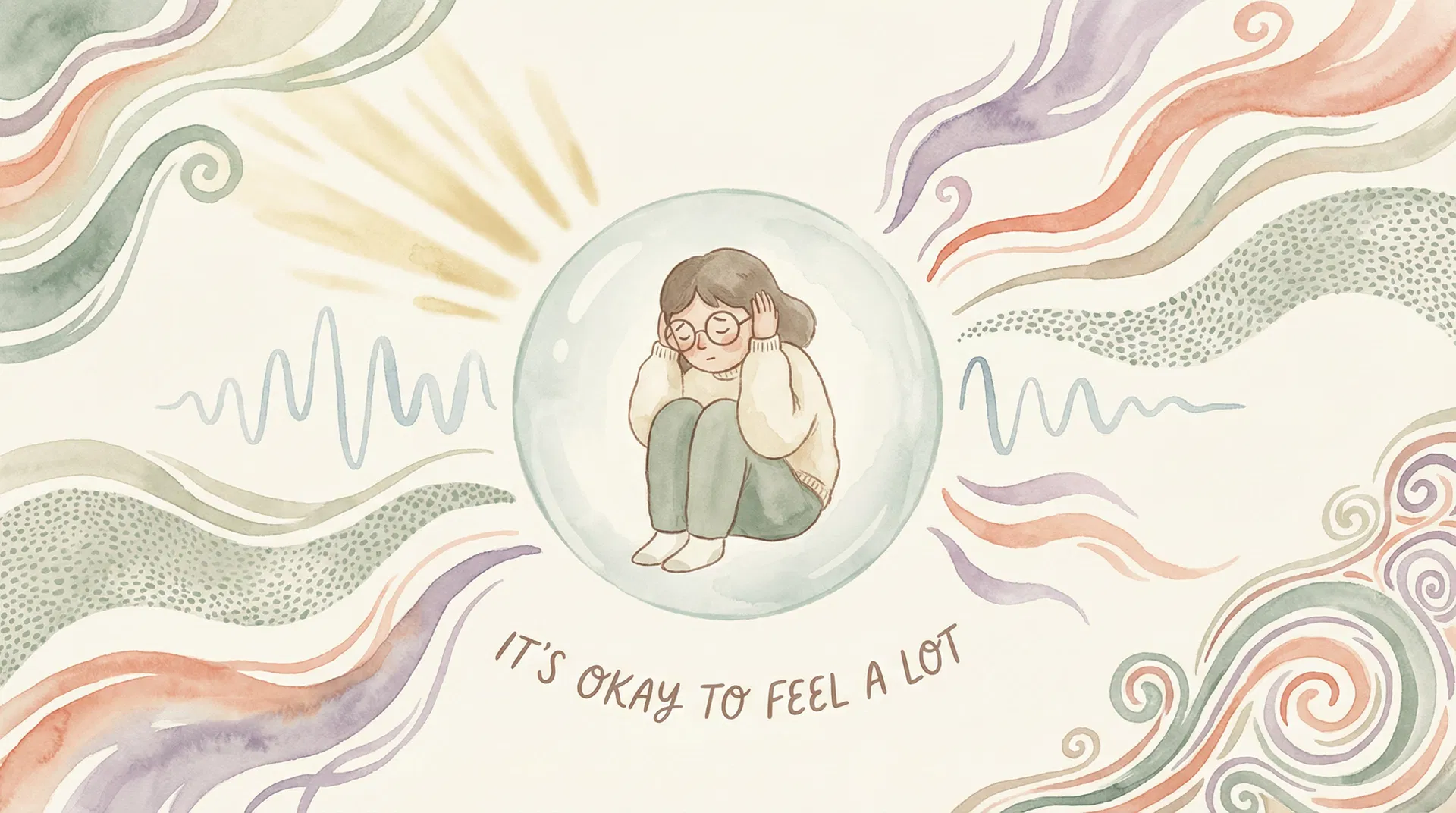
Imagine every sound in the room is turned up to maximum volume — the hum of the refrigerator, the ticking of a clock, someone chewing, a car passing outside, the buzz of fluorescent lights — and your brain cannot filter any of it out. Now add the feeling of your clothing tag scratching your neck, the brightness of overhead lights drilling into your eyes, and the smell of someone's perfume three desks away filling your nostrils. Everything is too much, all at once, and there is no off switch.
This is sensory overload, and for many neurodivergent people — particularly those who are autistic, have ADHD, or are highly sensitive — it is a regular part of life. Sensory overload occurs when the brain receives more sensory input than it can process. Instead of filtering out irrelevant stimuli (as neurotypical brains typically do), the neurodivergent brain tries to process everything simultaneously, leading to a system overwhelm.
The experience varies from person to person, but common descriptions include feeling like your skin is crawling, an urgent need to escape, difficulty thinking or speaking clearly, sudden irritability or anger, feeling like you might cry, physical pain (especially from sound or light), nausea, dizziness, and a sense of panic or dread. Some people describe it as their brain "short-circuiting" — too many inputs, not enough processing power.
The Neuroscience of Sensory Processing Differences
To understand sensory overload, it helps to understand how sensory processing works differently in neurodivergent brains.
In a neurotypical brain, the thalamus acts as a sensory gatekeeper, filtering incoming stimuli and deciding what reaches conscious awareness. Most background noise, ambient light, and routine physical sensations are filtered out before you ever notice them. This is called sensory gating, and it allows you to focus on what matters while ignoring what does not.
In many neurodivergent brains, this gating mechanism works differently. Research has shown that autistic brains, for example, often have heightened neural responses to sensory input — the signals are literally louder, brighter, and more intense at the neurological level. The brain's ability to habituate (get used to) repeated stimuli is also reduced, meaning that the ticking clock that a neurotypical person stops noticing after five minutes continues to demand attention in an autistic person's brain indefinitely.
ADHD brains face a related but slightly different challenge. While ADHD does not always involve heightened sensory sensitivity, it does involve difficulty with attentional filtering. The ADHD brain struggles to prioritize which sensory inputs deserve attention, leading to a flood of competing stimuli that can become overwhelming, especially in busy or chaotic environments.
Highly Sensitive Persons (HSPs) — a trait identified by psychologist Elaine Aron — process sensory information more deeply than average, leading to richer experiences but also quicker overwhelm. While HSP is not a clinical diagnosis, it overlaps significantly with neurodivergent sensory experiences.
Common Triggers: Mapping Your Sensory Landscape
Sensory overload triggers are highly individual, but there are common categories that affect many neurodivergent people. Understanding your specific triggers is the first step toward managing them.
Auditory triggers are among the most commonly reported. These include background noise in restaurants or offices, multiple people talking at once, sudden loud sounds (alarms, dogs barking, construction), high-pitched or repetitive sounds (beeping, ticking, humming), and certain frequencies or tones that feel physically painful. Many neurodivergent people describe misophonia — an intense emotional reaction to specific sounds like chewing, breathing, or keyboard clicking.
Visual triggers include fluorescent or flickering lights, bright sunlight or glare, cluttered or visually busy environments, rapid movement (scrolling feeds, busy streets, flashing screens), and certain patterns or color combinations. Some autistic people experience visual snow or other visual processing differences that add to the load.
Tactile triggers involve clothing textures (tags, seams, certain fabrics), unexpected touch from other people, temperature changes, the feeling of water (rain, showers), and certain food textures in the mouth. Many neurodivergent people have strong preferences about fabrics and will only wear certain materials.
Olfactory and gustatory triggers include perfumes and fragrances, cleaning products, food smells (especially in shared spaces), and certain taste or texture combinations. These triggers are often underrecognized but can be just as overwhelming as sound or light.
Social and cognitive overload is a less obvious but equally real form of sensory overwhelm. Processing social cues, maintaining eye contact, following group conversations, and navigating unwritten social rules all require significant cognitive effort for many neurodivergent people. After enough social processing, the brain can reach capacity just as it would from too much noise or light.
Immediate Coping Strategies: Your Emergency Toolkit
When sensory overload hits, you need strategies that work fast. Think of these as your emergency toolkit — techniques you can use in the moment to bring your nervous system back from overwhelm.
The 5-4-3-2-1 Grounding Technique is one of the most effective immediate interventions. Name 5 things you can see, 4 things you can touch, 3 things you can hear, 2 things you can smell, and 1 thing you can taste. This technique works by redirecting your brain's attention from the overwhelming flood of stimuli to specific, manageable sensory inputs. It engages the prefrontal cortex (rational brain) and helps calm the amygdala (alarm system). Our Calm Down tool includes a guided version of this exercise.
Noise management is critical for auditory overload. Keep noise-cancelling headphones or earplugs accessible at all times. Loop earplugs (designed to reduce volume without muffling) are popular in the neurodivergent community because they lower the overall noise level while still allowing you to hear conversations. In an emergency, even covering your ears with your hands or moving to a quieter space can help.
Stimming is your body's natural regulation mechanism — do not suppress it. Rocking, hand-flapping, fidgeting, humming, or using a fidget toy are all ways your nervous system self-regulates. If you are in a situation where visible stimming feels unsafe, try less visible options: pressing your fingertips together firmly, tensing and releasing your toes inside your shoes, or running your thumb along a textured surface in your pocket.
Cold exposure can rapidly shift your nervous system state. Splash cold water on your face, hold an ice cube, press a cold water bottle against your wrists or neck, or step outside into cool air. Cold activates the dive reflex, which triggers the parasympathetic nervous system (your body's "calm down" system) and can interrupt the overwhelm cycle within seconds.
Remove yourself if possible. There is no shame in leaving a situation that is causing sensory overload. Step outside, go to a bathroom, sit in your car, or find any quieter space. Even a few minutes of reduced stimulation can help your brain reset. If you cannot leave, try reducing input by closing your eyes, putting in earplugs, or focusing on a single calming sensory input (like the feeling of your feet on the ground).
Long-Term Strategies: Building a Sensory-Friendly Life
While emergency coping strategies are essential, the real goal is to build a life that minimizes unnecessary sensory overwhelm in the first place. This is not about avoiding the world — it is about designing your environment and routines to work with your brain.
Create a sensory audit of your daily life. Spend a week tracking when you feel overwhelmed, what triggered it, and how intense it was (our Daily Check-in tool can help with this). Look for patterns: Is it always worse on certain days? After certain activities? In specific environments? This data becomes the foundation for targeted changes.
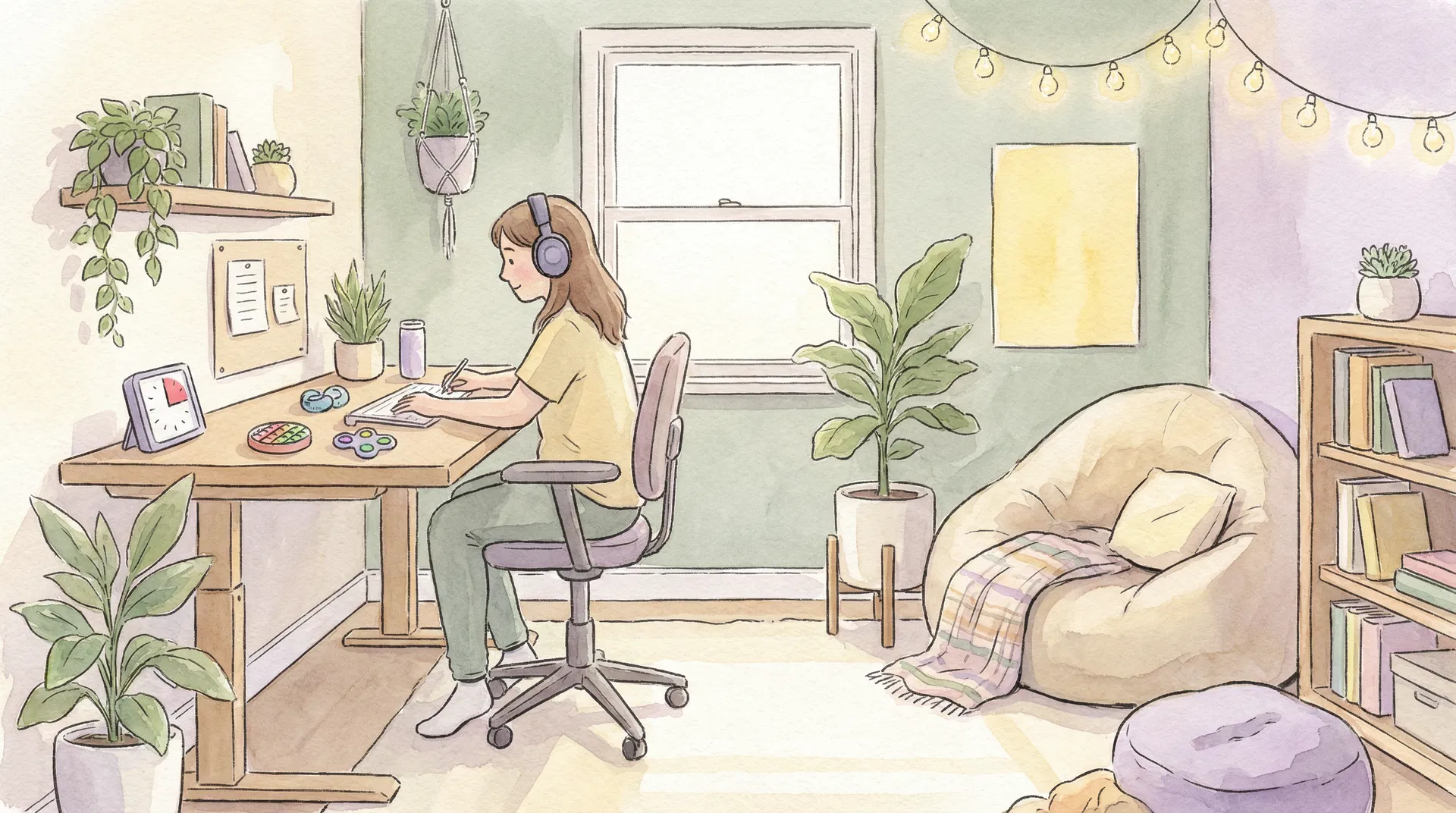
Design your home as a sensory sanctuary. Consider lighting (warm, dimmable lights instead of overhead fluorescents), sound (white noise machines, rugs and curtains to absorb sound), textures (bedding and clothing in fabrics that feel good), and visual calm (reducing clutter, using soothing colors). Your home should be the place where your sensory system can fully relax and recover.
Build a sensory diet. Occupational therapists use the term "sensory diet" to describe a personalized plan of sensory activities throughout the day that help maintain optimal arousal levels. This might include morning movement (exercise, stretching), midday sensory breaks (listening to music, using a weighted lap pad), and evening wind-down rituals (warm bath, dim lights, calming scents). The goal is proactive regulation rather than reactive crisis management.
Communicate your needs. Many people around you — partners, friends, colleagues — want to help but do not know how. Being specific about your sensory needs ("I need to sit away from the speaker," "Can we meet in a quieter restaurant?", "I might need to step out for a few minutes") is not demanding — it is self-advocacy. The more you practice communicating your needs, the easier it becomes.
Know your accommodation rights. In many countries, sensory processing differences are recognized as a basis for workplace and educational accommodations. This can include things like a quieter workspace, permission to wear noise-cancelling headphones, flexible lighting arrangements, or the ability to take sensory breaks. You deserve an environment that does not cause you pain.
Sensory Overload at Work, School, and Social Events
Some of the most challenging sensory environments are the ones we cannot easily escape: workplaces, classrooms, and social gatherings.
At work, open-plan offices are a common nightmare for sensory-sensitive people. Strategies include wearing noise-cancelling headphones (even without music — they reduce ambient noise), positioning your desk away from high-traffic areas, using a screen filter to reduce glare, keeping a sensory toolkit in your desk drawer (fidget toy, essential oil, earplugs), and scheduling regular breaks to decompress. If possible, negotiate work-from-home days or flexible hours to reduce your overall sensory load.
At school or university, lecture halls and busy campuses can be overwhelming. Sit near the exit so you can leave if needed, use earplugs during transitions between classes, find a quiet spot on campus for breaks, and communicate with professors about your needs. Many schools have disability services that can arrange accommodations like a quiet testing room, recorded lectures, or flexible attendance policies.
At social events, the combination of noise, crowds, unpredictable social demands, and often alcohol can create a perfect storm of sensory overload. Strategies include arriving early (before the crowd builds), having an exit plan (drive yourself or know the bus schedule), taking regular breaks outside or in a quieter room, bringing a sensory anchor (a familiar object that provides comfort), and giving yourself permission to leave early without guilt. You can also suggest sensory-friendlier alternatives: a walk instead of a bar, a small dinner instead of a large party, a daytime activity instead of an evening one.
Remember that sensory overload is cumulative. A day of managing mild sensory stress at work can leave you with zero capacity for a noisy restaurant in the evening. Track your energy and sensory load throughout the day, and plan accordingly. It is not weakness to say "I have had too much sensory input today" — it is self-awareness.
You Might Also Like
 Workplace
Neurodivergent at Work: A Practical Guide to Accommodations You Can Actually Ask For
Most workplaces were not designed for neurodivergent brains. This guide covers 15 specific accommodations you can request, how to ask (with email templates), your legal rights, and self-accommodations you can implement today.
Read article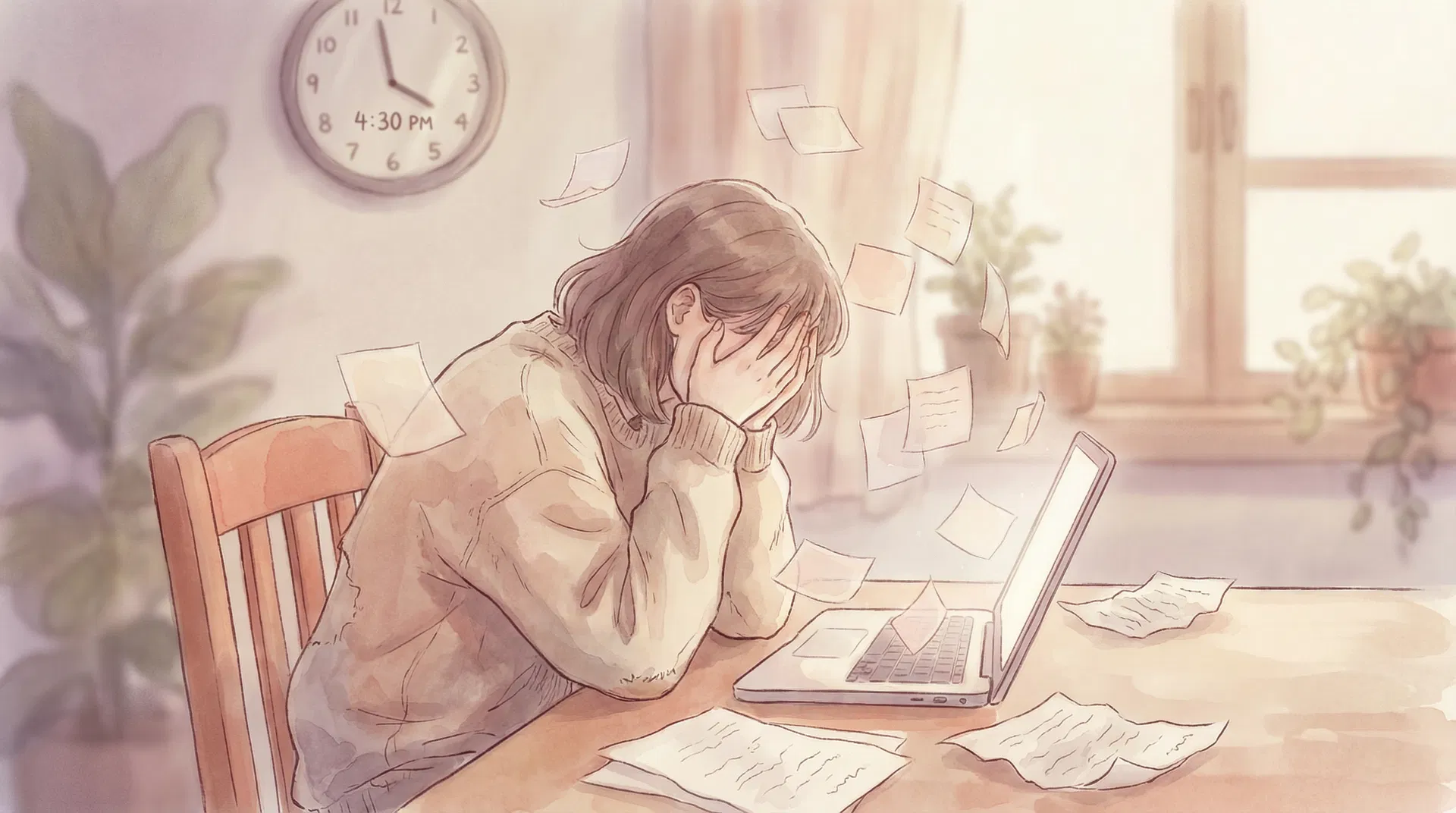 ADHD
ADHDADHD Paralysis: Why You Can't Start Tasks (And 9 Ways to Break Free)
You know what you need to do, but you cannot start. ADHD paralysis is not laziness — it is a neurological bottleneck. Learn about the three types of paralysis, the neuroscience behind the freeze, and 9 practical strategies to break free.
Read articleFind your calm when the world gets too loud
Our Calm Down Corner has guided grounding exercises and breathing techniques designed for sensory overwhelm.